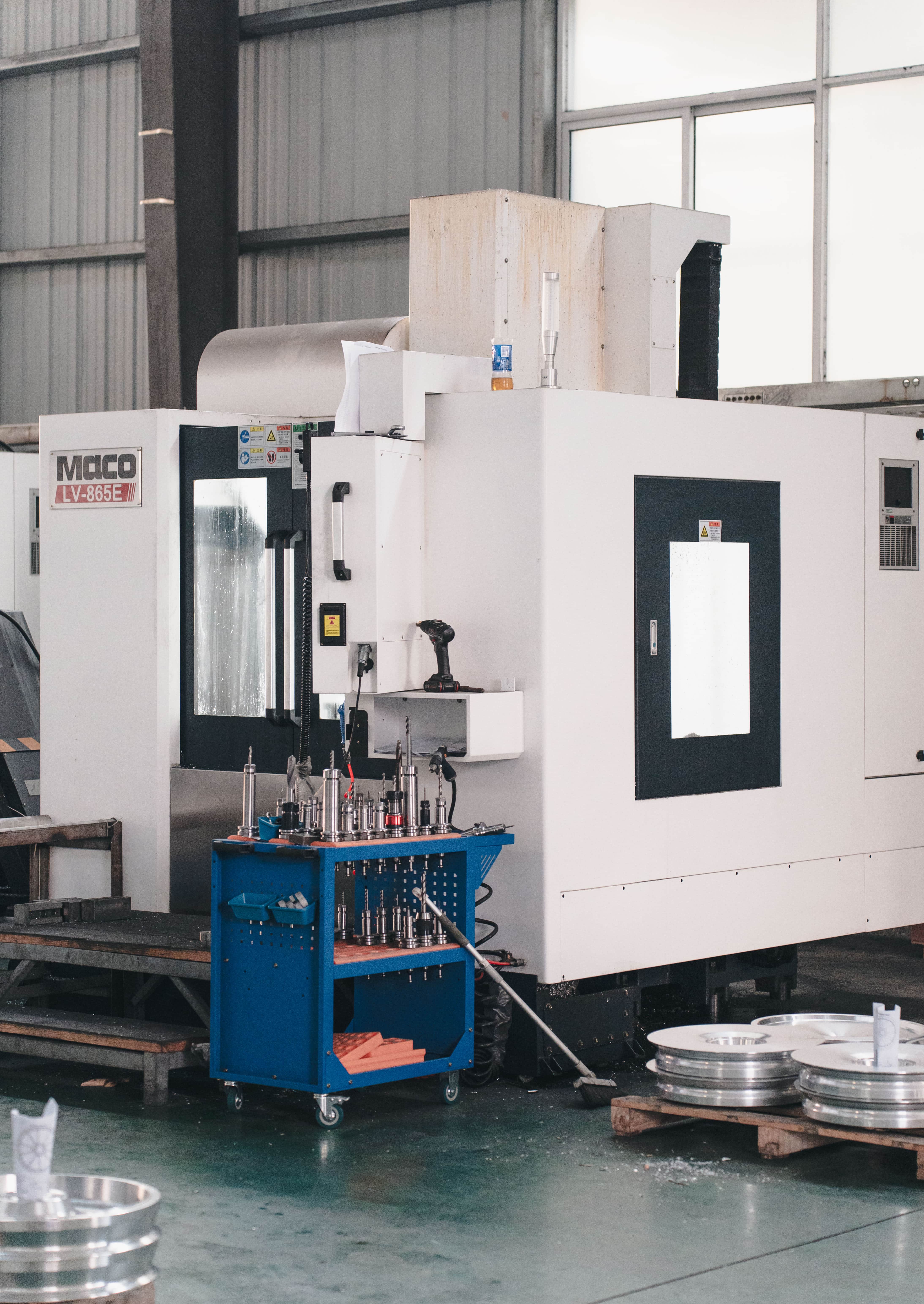
How custom forged wheels move from brief to shipment
The XINLAI forged wheel process is a six-stage B2B workflow: confirm requirements, review CAD/DFM, prepare 6061-T6 forging, CNC machine the wheel, apply surface finishing and branding, then inspect, package, and coordinate export delivery.
01
Requirements and fitment review
The XINLAI process starts by confirming wheel size, width, PCD, center bore, offset, brake clearance, finish, logo, packaging, quantity, and destination country.
Vehicle model and market application
Wheel size, width, PCD, CB, ET, and brake clearance
Finish, logo, cap, carton, and private-label requirements
02
Design, CAD, and DFM engineering
XINLAI reviews the buyer brief for manufacturability, styling, machining allowance, fitment risk, finish feasibility, and production repeatability before sampling.
CAD/DFM review for custom wheel programs
Fitment and machining feasibility check
Sampling plan for new private-label SKUs
03
6061-T6 forging preparation
Forged wheel production uses 6061-T6 aluminum as the material focus for custom forged car and motorcycle wheel programs requiring strength, weight control, and precision machining.
6061-T6 forged aluminum material focus
Program planning for car and motorcycle wheels
Blank preparation aligned to wheel architecture
04
CNC machining and fitment cutting
CNC machining converts the forged blank into the required wheel geometry, including face design, bolt pattern, center bore, offset, brake clearance, and weight-reduction features.
PCD, CB, ET, and face machining
Custom spoke and pocket machining
Dealer or brand-specific fitment requirements
05
Surface finishing and branding
Finishing prepares the forged wheel for the buyer market with color, polish, brushed, painted, anodized, two-tone, logo, cap, and private-label packaging options.
Brushed, polished, painted, anodized, or two-tone finishes
Logo and cap coordination
Private-label appearance and carton requirements
06
QC, packaging, and export support
Final handling covers inspection, buyer confirmation, protective packaging, export coordination, and shipment support for international B2B forged wheel orders.
Multi-stage inspection and final confirmation
Protective packaging for international shipping
Export coordination for dealers and distributors
Quality Inputs
What controls the result
Accurate B2B inputs reduce sampling friction. XINLAI uses buyer specifications to align design, machining, finish, branding, packaging, and export handling before production begins.
Fitment inputs
Size, width, PCD, center bore, offset, brake clearance, and vehicle application
Manufacturing inputs
Forged wheel type, 6061-T6 material focus, CNC geometry, face design, and finish target
Branding inputs
Logo, cap, carton, label, product photography, and private-label documentation needs
Commercial inputs
Sample requirement, quantity, lead-time target, destination country, and freight expectation
Approval outputs
Sample confirmation, finish approval, packaging confirmation, and bulk-production readiness
Manufacturing Process FAQ
What is the XINLAI forged wheel manufacturing process?
The XINLAI process covers requirements review, CAD/DFM engineering, 6061-T6 forging preparation, CNC machining, surface finishing, branding, inspection, packaging, and export support.
What details should buyers provide before production?
Buyers should provide vehicle model, wheel size, width, PCD, center bore, offset, brake clearance, finish, logo, packaging, quantity, destination country, and any drawing or reference image.
Does the process support OEM and ODM wheel programs?
Yes. OEM programs use buyer-provided specifications, while ODM programs can start from market goals, style direction, vehicle fitment, finish target, and performance requirements.
Can XINLAI produce both car and motorcycle forged wheels?
Yes. XINLAI supports custom forged car wheels and forged motorcycle wheels, including performance car, beadlock, sportbike, cruiser, adventure, and custom applications.
How does XINLAI prepare forged wheels for export?
XINLAI coordinates protective packaging, project documentation, final confirmation, and international shipment support for B2B buyers, dealers, distributors, and private-label brands.
Production Brief
Prepare your wheel program for review
Send fitment, finish, logo, packaging, quantity, and destination details so XINLAI can review your custom forged wheel manufacturing path.